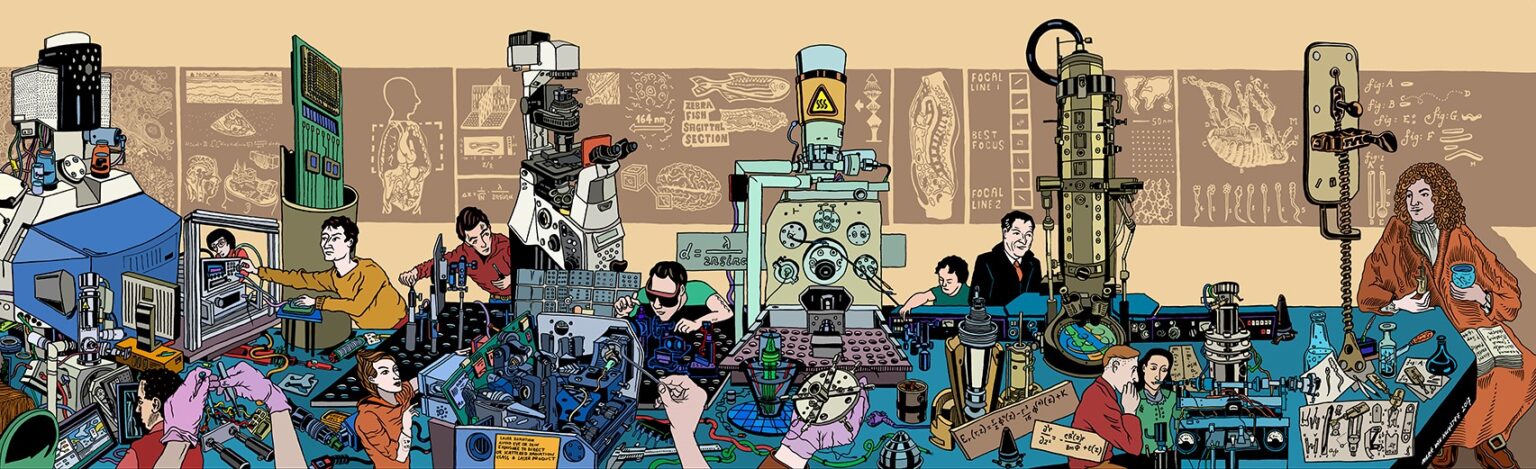
Our research is in the area of instrumentation for electron and ion beam microscopy and patterning. Besides a thriving academic community that uses such instrumentation to conduct world-class research, the Netherlands has also a unique cluster of companies, including Thermo-Fisher-Scientific (formerly FEI), ASML, Raith, Delmic, former MAPPER (now ASML-Delft), and others, dedicated to producing the electron and ion-beam instruments. Pioneering research at Delft University of Technology has played a crucial role in shaping this sector of the Dutch economy.
TUDelft stands out globally as one of the very few universities conducting research and education on charged particle optics. Many of our graduates (MSc and PhD) find their way to these prominent companies. In addition to supplying skilled personnel, we can support this network by conducting explorative academic research on new and potentially disruptive technologies.
Conducting this research at TUDelft has the potential to directly impact Dutch science and the economy at large. This serves as our main source of motivation, alongside our scientific interest and curiosity in electron microscopy and high-resolution, high throughput imaging.
Charged particle optics is the science and technology of generating, controlling, focusing, and analyzing beams of charged particles, such as electrons, ions, or protons, using electromagnetic fields. Charged particle optics instrumentation provides the tools that allow scientists to visualize matter at the Atomic scale, probe atomic structure, fabricate micro- and nano-devices, and explore the fundamental properties of the universe. The field combines physics, electrical engineering, precision mechanics, and computational modeling to design instruments that can manipulate charged particles with extraordinary accuracy.
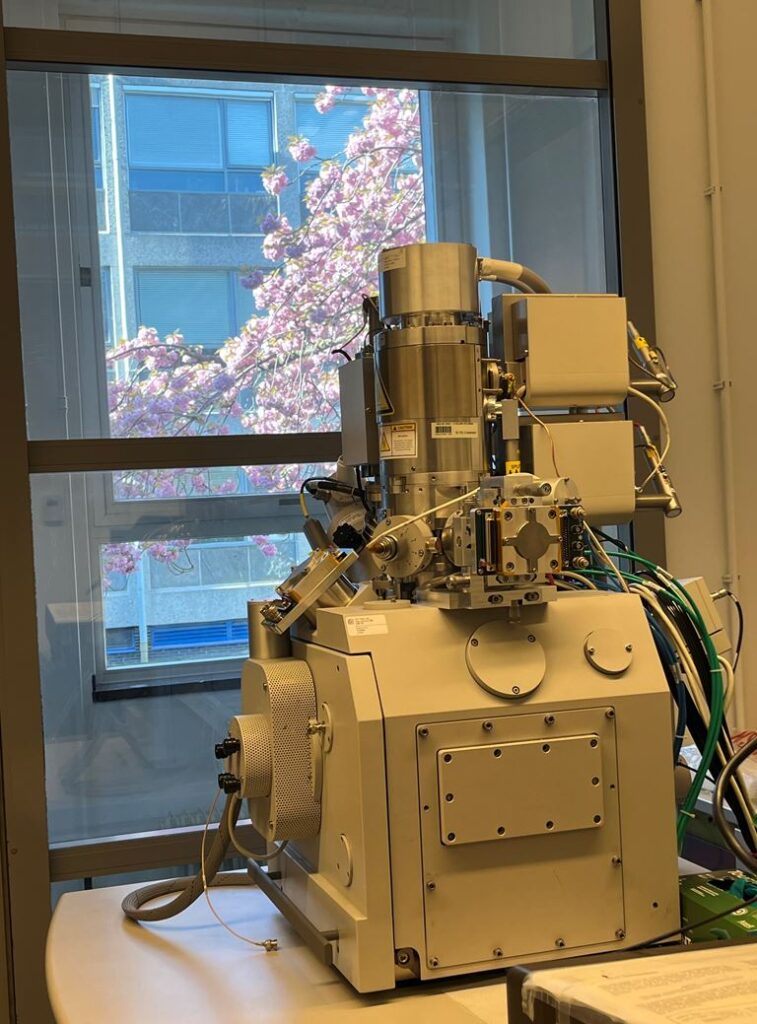
SEM & (S)TEM
Electron Microscopy
Scanning Electron Microscopy (SEM) and (S) Transmission Electron Microscopy ((S)TEM)